Automate the boring stuff: from coding to instructing
It worked. But to be honest, it was mostly a lot of coding. Learning syntax, debugging, working out libraries. For every boring task you automated away, there was a sizeable pile of technical work first. For most people in a commercial or supply chain role, it therefore stayed a good intention.
From coding to instructing
That is increasingly a thing of the past. The shift is from coding to instructing. More and more tools let you describe the result you want, and the technology behind it is set up for you.
Since last week, Copilot Code has joined them, in Microsoft's Frontier programme, alongside Chat and Cowork. You describe what you need and Copilot builds it: an app, a tracker, a dashboard. Based on your own emails, documents and data, and running inside your own Microsoft 365 environment, under the security and governance your IT department has already set up.
If your organisation wants to stay within the Microsoft platform, this is, in my view, the next step. Repetitive tasks are automated in a short time, without shadow IT, by the people who know the process. Freeing up time and space for the work that really matters.
I tinkered with it last week. Two prototypes, both on FMCG processes I have known from the inside for 30 years.
1. Promotion confirmations that check themselves
Every account manager knows it: retailers confirm promotions by email. Someone has to put that confirmation next to the original proposal. Is the mechanic right? The period? The price? The volume? It is done by hand, often under time pressure, and differences slip through until the invoice or an out-of-stock gives them away.
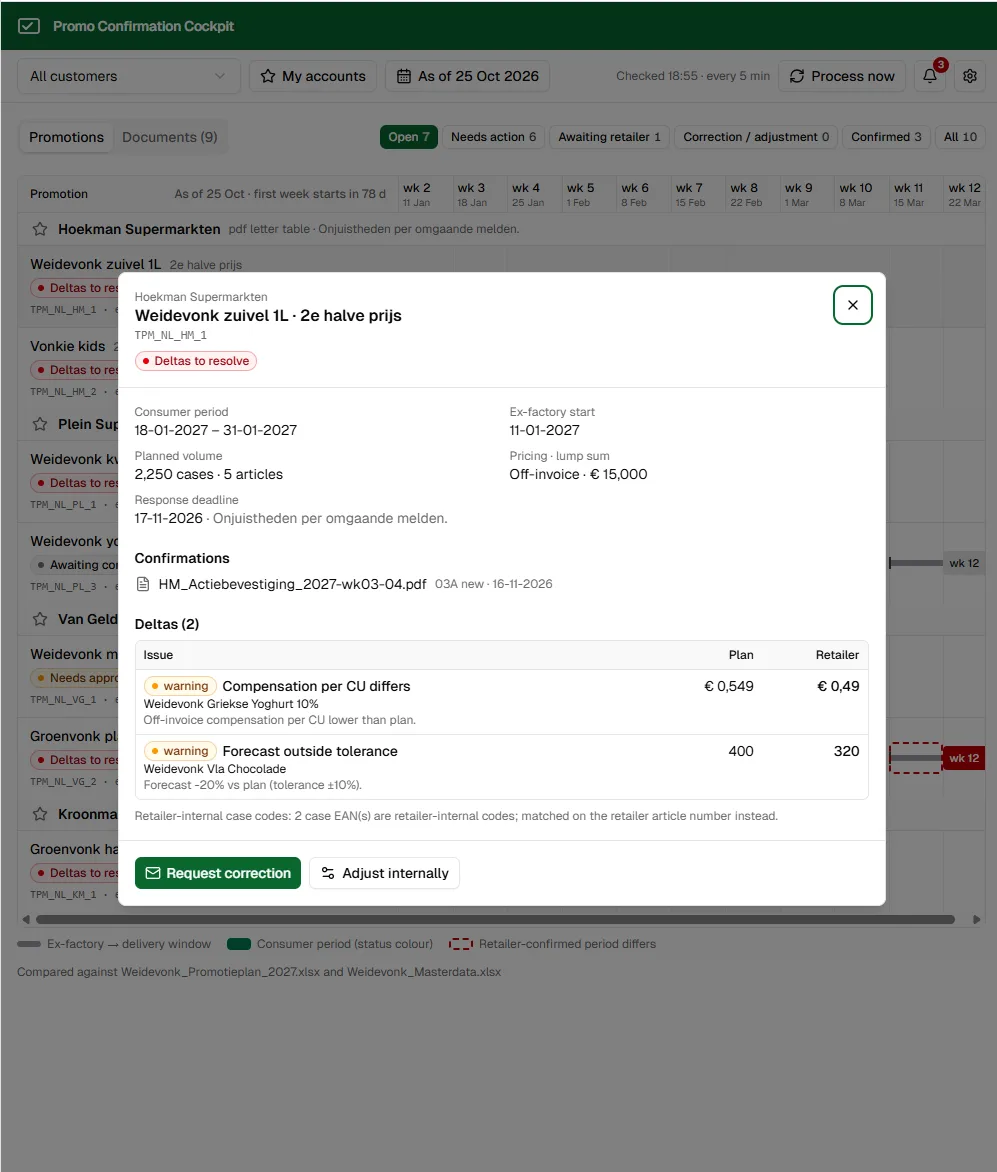
What I built: a monitored mailbox. When a confirmation comes in, it is automatically compared with the internal promotion plan. In this case an Excel file, but it could just as well be a link to a TPM or ERP system.
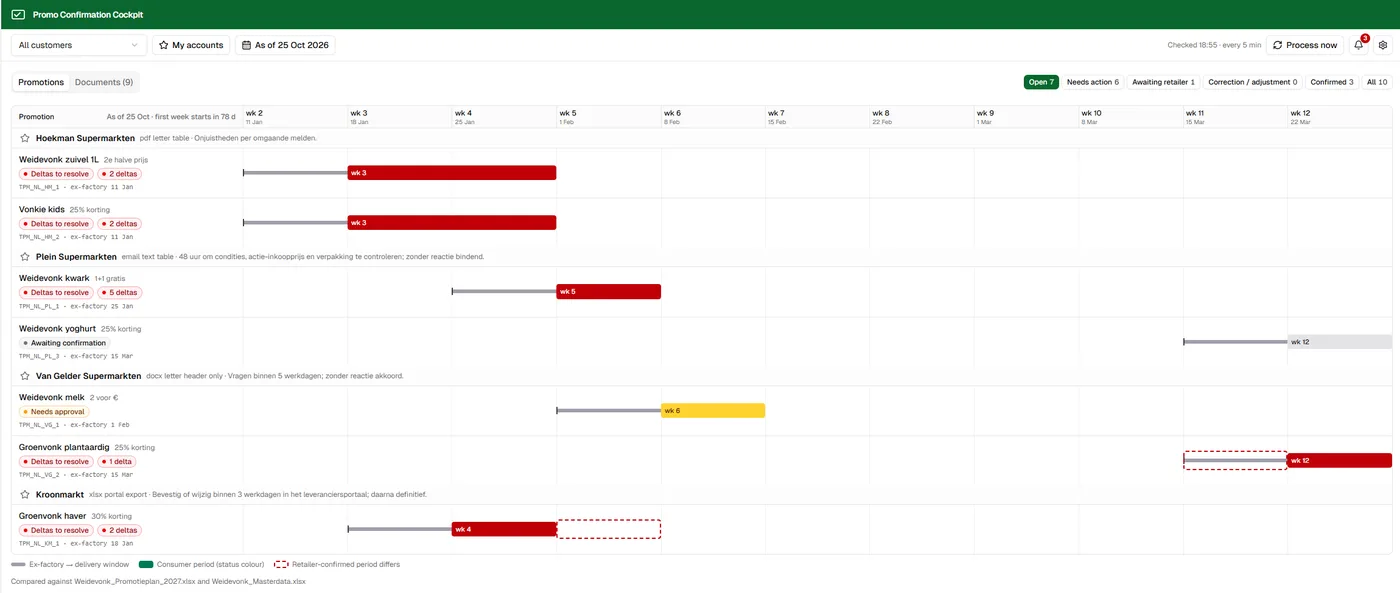
- All correct? Status approved, done.
- A difference? You see exactly what differs, and you choose: contact the retailer or adjust your own systems.
People decide. The machine does the comparing.
2. Risk & Opportunity for S&OP
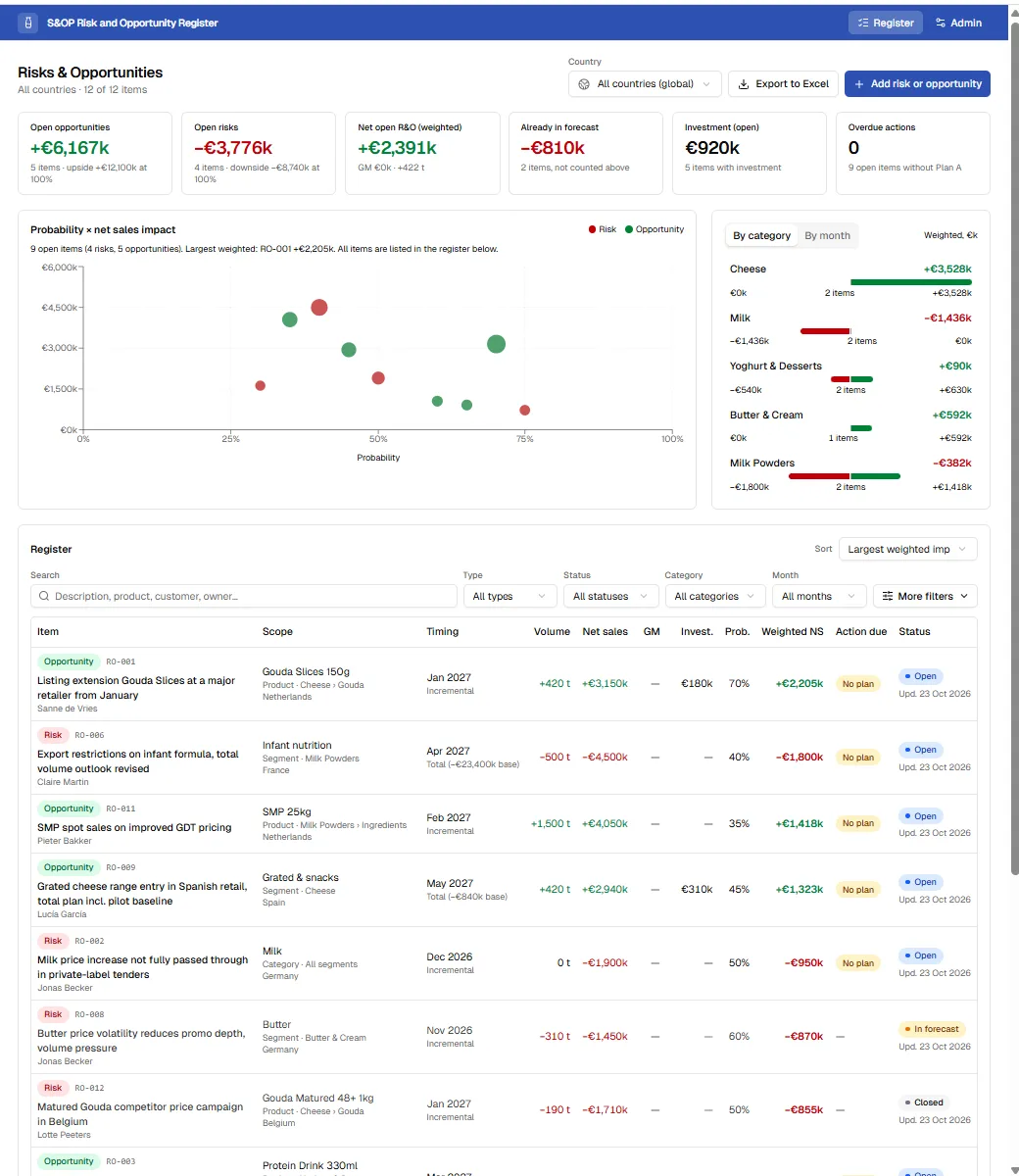
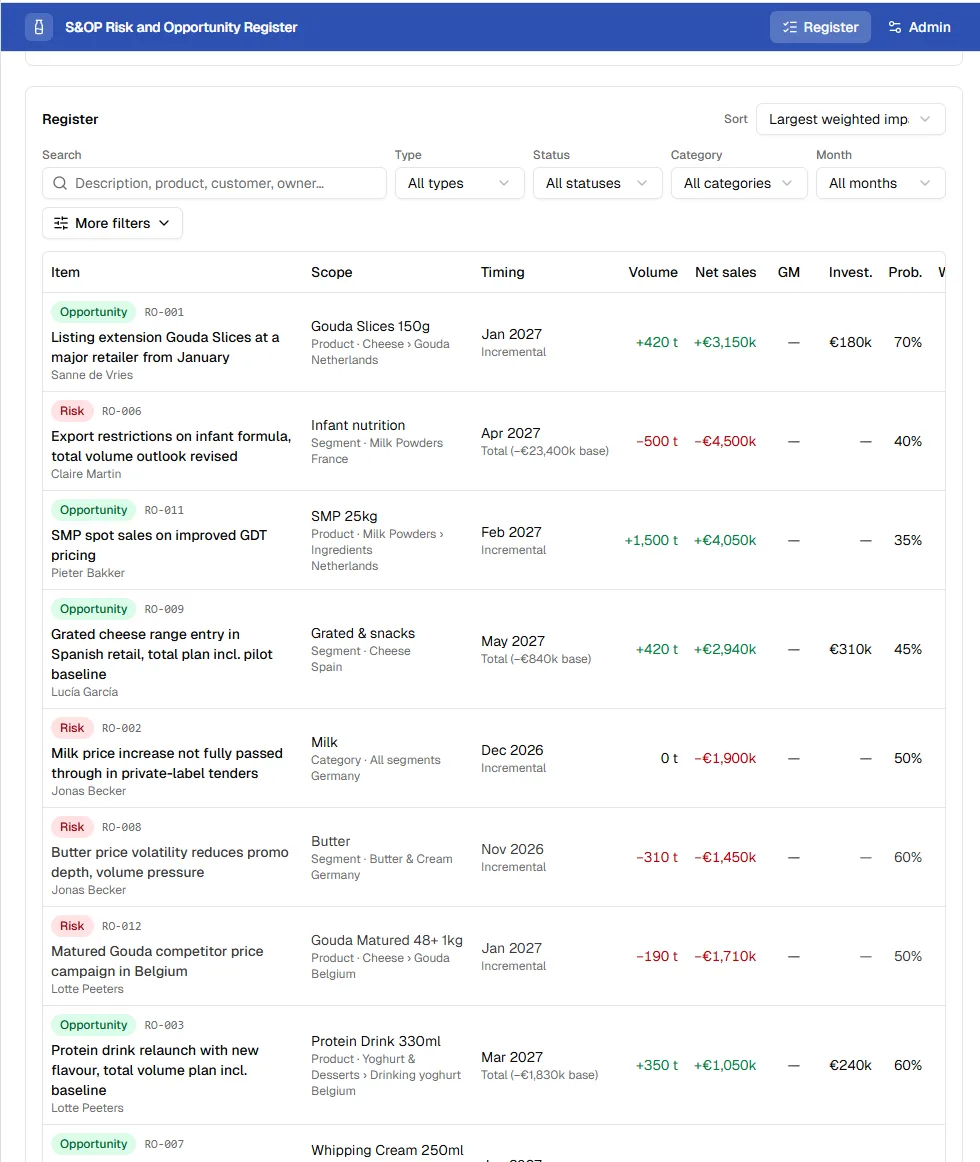
Every S&OP process comes back to the same question: what is the realistic outcome of the current plan, what is the target, and what sits in between? We fill that gap with risks and opportunities, spread across countries, Excel files and heads.
What I built: a global tool in which every country enters its risks and opportunities, quantifies them and weights them by probability. Everything lands in SharePoint lists. The result: one weighted view to steer the plan by, instead of an email round in the week before the review.
Technology is no longer the barrier
Neither tool is technically spectacular. That is exactly the point. FMCG is full of this kind of boring stuff: checking, comparing, collecting, flagging. Work too small for an IT project and too big to do well by hand.
The barrier used to be: can you program it? Now the barrier is: can you instruct it well? And for that you need to know where the confirmation comes from, what "correct" means in your organisation, and where the truth lives. The tool is there. The process knowledge has to go in.
Training budget left? Spend it on your own boring stuff
I combine 30 years in FMCG (order-to-cash, trade promotion, S&OP at companies including Campina and Unilever) with hands-on automation, in the Microsoft platform and beyond. Want to get started with your team? I run an interactive workshop in which we build on your own processes. So that afterwards you have a working first result and know how to keep building.
Which boring stuff would you most like to be rid of tomorrow? Let me know.
A workshop on your own processes, with a working first result at the end.
Send me a messageHave software built